Planning for Retirement in Panama City, Florida: Income Built to Last
You've rebuilt before. Now let's make sure your retirement income is on solid ground. Your Retirement Income Review is by phone or video.
If you live in Panama City and the years ahead include retirement, you may be asking yourself:
- Can I afford to retire?
- Will my money last?
- What if the stock market drops right after I stop working?
- When should I take Social Security?
- How much monthly income will I actually have?
- What should I do with my 401(k)?
- Is an annuity actually safe?
- Can I create my own personal pension?
Safe Harbor Retirement is a veteran-owned retirement income planning firm. We work with retirees and pre-retirees in Panama City and across Bay County. We help you see where your income will come from, how much risk your savings carry and what your choices are. We don't promise outcomes.
Retirement Planning for Panama City Residents
Panama City is the county seat of Bay County, on St. Andrews Bay along Florida's Panhandle coast. Three bridges, the Bailey, Dupont and Hathaway, tie the city to the beaches and neighborhoods around the bay.
Source: U.S. Census Bureau 2020 Census figures, as summarized on Wikipedia's Panama City, Florida entry.
A few local features are worth thinking about as you plan:
- A military and government-linked economy. Tyndall Air Force Base is in the middle of a large rebuild after the 2018 storm, reported at about $5.3 billion. Naval Support Activity Panama City and a Coast Guard station are nearby too. If you served or worked as a civilian for the federal government, your pension, Thrift Savings Plan (TSP) and VA benefits should be coordinated with Social Security.
- Industry and trades. Employers around the bay have included Eastern Shipbuilding, L-3, Oceaneering, Florida Power & Light and Trane. Many people in industrial and skilled-trade careers have a 401(k) rather than a pension, and sometimes both.
- Education. Gulf Coast State College is in Panama City. Teachers and college staff often have a state retirement plan to factor in.
- Healthcare. Ascension Sacred Heart Bay and HCA Florida Gulf Coast Medical Center both serve the area. Healthcare workers approaching retirement often have employer accounts that need a distribution plan.
Panama City's population fell between 2010 and 2020 while neighboring beach communities grew. It's a reminder that where you live will keep changing, and your plan should be able to change with it.
How Do I Know Whether I Can Retire?
There's no single balance that works for everyone. A couple with $600,000 and a paid-off home may be in a better spot than a couple with $1.1 million, a mortgage and costly habits. What counts is the gap between income you can count on and the income you need.
A solid review considers monthly spending, Social Security, pensions and military retirement pay, 401(k), 403(b), TSP and IRA balances, savings, housing and insurance costs, healthcare, taxes, debt, and the legacy you want to leave.
A Panama City couple wants $7,200 a month. Their combined Social Security benefits are $4,600. That leaves a $2,600 monthly gap.
The next question: how can their savings help cover that $2,600 with as much reliability as possible? That's what retirement income planning is about.
Will My Money Outlast Me?
A retirement that starts at 65 may run 20, 25 or 30 years, or longer. The risks stack up over that time: market swings, inflation, rising healthcare and insurance costs, home repairs and surprises.
Many retirees blend Social Security, a pension if they have one, investment withdrawals and annuity income instead of leaning on one source. No approach removes all risk. The point is to know which dollars depend on markets and which don't.
What If the Market Falls Just After I Retire?
At 40, a big drop hurts but you have time. At 65, you may be selling investments for income while prices are down. That's called sequence-of-returns risk. Early losses plus withdrawals leave less money in place to recover when markets turn.
We can't predict a downturn. We can help you test whether your essential bills would still be covered if one happened early.
Three Buckets, Three Jobs
Different parts of your savings can do different work.
Assets positioned for longer-term growth. Values can rise and fall.
Cash and accessible funds for emergencies, deductibles and near-term spending.
Assets meant to provide more predictable income. Some retirees look at fixed or fixed indexed annuities for part of this bucket.
We are not suggesting you move everything into annuities. That wouldn't suit most people.
When Is the Right Time to Claim Social Security?
You can claim as early as 62, at full retirement age, or as late as 70. Claiming later generally raises the monthly check. Claiming earlier means a smaller check for more months.
The answer isn't the same for everyone. It turns on your health and family history, whether you're still working, your spouse's benefit, survivor benefits, other income and your overall plan. For married couples, the higher earner's choice can shape the surviving spouse's income for decades.
Florida doesn't tax Social Security. Federal tax may apply depending on your income. Try our Lifetime Income Estimator to see how different ages might change the picture.
What Does "Monthly Retirement Income" Really Mean?
A $750,000 account is not the same as knowing how much you can spend each month. You can't hand a balance to the grocery store.
- How much income can my savings reasonably support?
- How much of it is contractually guaranteed?
- How much depends on the market?
- What happens if there's a downturn?
- What if I live to 95?
It's best to have answers before your last paycheck, not after.
What Should I Do With My 401(k) or TSP at Retirement?
Depending on the plan, you might leave money where it is, roll it into an IRA, take distributions, consider Roth conversions, set aside part for income or evaluate an annuity. Many people combine approaches.
Compare fees, investment menus, liquidity, taxes, beneficiaries, required minimum distributions, creditor protection and market exposure. Don't rush it. Your account may need to support you for 30 years.
What Is a Personal Pension?
It's an everyday phrase, not a product or a government program. A personal pension means using part of your savings to create a contractual stream of income that can last for life. Fewer workers have traditional pensions now, but the appeal is the same: a paycheck you can plan around.
How Could an Annuity Create a Personal Pension?
Social Security: $3,700 per month
Pension: $700 per month
Desired income: $7,100 per month
Income gap: $2,700 per month
One option to evaluate is whether using a portion of savings for an annuity with a lifetime income feature could cover part of that $2,700. The remaining savings could stay available for growth, emergencies and family.
Whether it fits depends on age, health, other assets and how you feel about limits on access to your money. We look at that first.
Are Annuities Actually Safe?
It depends on the contract and the job you want it to do.
- Annuities are insurance contracts, and there are many kinds.
- Fixed indexed annuities don't invest directly in a stock index. Interest is linked to an index and the contract value is protected from direct market losses, subject to the contract's terms.
- Caps, participation rates and spreads can limit the interest you earn.
- Surrender charges may apply, and liquidity can be limited.
- Guarantees are backed by the financial strength and claims-paying ability of the issuing insurer.
An annuity is neither automatically good nor bad. The test is whether it solves a real problem in your plan.
Retirement Planning and Taxes in Florida
Florida has no state personal income tax. It doesn't tax Social Security, pension income, military retirement pay or 401(k) and IRA withdrawals. There's also no state estate or inheritance tax.
Federal taxes still apply, and up to 85% of Social Security can be federally taxable depending on income. Property taxes, sales taxes and insurance premiums remain part of the cost of living.
Tax laws change and individual situations differ. Talk with a qualified tax professional about yours.
Retirement Considerations for Panama City Residents
Hurricane Michael is part of the story here, and it shows up in retirement budgets.
- Storm history. Michael came ashore on October 10, 2018, as a Category 5 hurricane with 160 mph winds, and Panama City took heavy damage. Homeowners, wind and flood insurance, deductibles and repair reserves all belong in your plan.
- Rebuilding and home values. If you've repaired or rebuilt a home, consider whether it still fits your life at 75 or 80. Downsizing may free cash, and what you do with it matters.
- Healthcare close to home. With two hospitals in the city, many people stay put. Include out-of-pocket costs in the budget.
- Working longer. If you plan a part-time job in retirement, treat the income as a bonus until it's proven.
- Family nearby or far away. Helping children or traveling to see grandchildren has a price tag.
What Should a Retirement Plan Cover?
- Retirement income: how much you need and where it comes from
- Social Security: claiming age and spousal coordination
- Investments: how much market risk to keep
- Principal protection: whether part of your savings should be shielded from direct market losses
- 401(k), TSP and IRA planning: positioning and withdrawals
- Taxes: what you get to keep
- Healthcare costs: how they fit in your budget
- Longevity: living into your 90s
- Legacy: what you leave to family
These pieces should work together, not as separate decisions.
Retirement Should Be About More Than Watching the Market
You've weathered a lot. You shouldn't have to check the market every morning to know whether the bills are covered.
Most people want clear answers: where income comes from, which money is liquid, which is exposed to the market, which is meant to produce income, and what happens in a downturn.
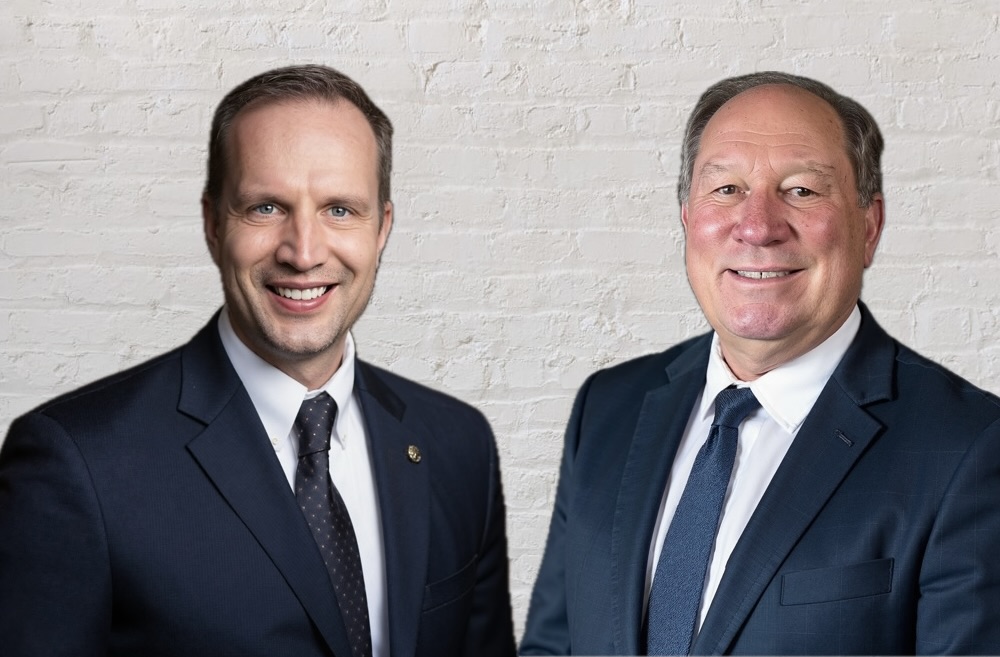
Meet John and Jeff
John Anderson flew Army helicopters and spent 25 years as a commercial airline pilot. Jeff Frankenfield served in the Air Force and holds a degree in finance.
Both are veterans, and both are committed to helping everyday Americans build retirement income they can understand. We explain everything in plain language, with no pressure.
Free Florida Retirement Income Guide
A plain-English guide to Social Security timing, protecting retirement income from market drops and closing income gaps, for Panama City area retirees. Sent to your email.
Start Building Your Panama City Retirement Income Plan
Safe Harbor Retirement offers a Retirement Income Review by phone or video. We'll walk through:
- Your retirement savings
- Social Security
- Pensions
- 401(k)s and IRAs
- Investments
- Expected expenses
- Market risk
- Income gaps
- Annuity options, when appropriate
- Your retirement income goals
No pressure and no obligation. You'll leave with a clearer picture of where you stand.
Learn more about retirement planning throughout Florida. Nearby: Panama City Beach, Lynn Haven and Fort Walton Beach.
Frequently Asked Questions
How much money do I need to retire in Panama City?
It depends on your spending, Social Security, pension, debt, insurance and healthcare costs. An income analysis estimates how much your savings must produce each month.
Does Florida tax Social Security?
No. Florida has no state income tax. Federal tax may still apply depending on your income.
What should I do with my TSP or 401(k)?
You may leave it, roll it to an IRA, take distributions or use part for income. The right path depends on your circumstances.
What happens if the market crashes after I retire?
Losses early in retirement hurt more when you are also withdrawing money. Planning separate buckets for growth, liquidity and income can help address that.
Can I protect some savings from market losses?
Some fixed and fixed indexed annuities protect contract value from direct market losses, subject to contract terms. They also have limits and surrender charges.
What is a personal pension?
It is an informal term for creating your own predictable income stream, often with a lifetime income annuity, subject to contract terms and the insurer's claims-paying ability.
Are annuities safe?
It depends on the product, the terms and the insurer. They come with guarantees, limits and costs you should understand before you buy.
Should I put my whole retirement account into an annuity?
Usually not. Most plans balance income, liquidity, growth and protection.
Can a military or federal pension change my plan?
Yes. A pension covers part of your income gap, which can change how much additional income you need from savings.
How should I think about hurricane costs in retirement?
Premiums, deductibles and repairs are real expenses. Many retirees keep a liquid reserve for them.
Do I have to visit an office?
No. The Retirement Income Review is by phone or video.

Insurance and annuity guarantees are backed by the financial strength and claims-paying ability of the issuing insurance company. Fixed indexed annuities are insurance products and do not directly participate in the stock market. Annuities may include surrender charges, withdrawal limitations and other contract provisions. Insurance products and availability may vary by state. This material is intended for general informational purposes and should not be considered individualized investment, tax or legal advice. Consult appropriate professionals regarding your individual circumstances.
Get the Free Florida Retirement Income Guide
Enter your details and we'll email it to you. No obligation.