Building a Retirement Paycheck in St. Petersburg, Florida for Both Spouses
A retirement plan has to work for two people today and one person later. We help you plan income for both. Your Retirement Paycheck Review is by phone or video.
If you live in St. Petersburg, or you are planning to retire here, you probably have questions like these:
- Can we afford to retire together?
- Will our money last for both of us?
- What if the market falls after we retire?
- When should each of us take Social Security?
- How much monthly income will we have?
- What should we do with our 401(k)s?
- Is an annuity actually safe?
- Can we create a personal pension?
Safe Harbor Retirement is a veteran-owned retirement income planning firm. We work with retirees and pre-retirees in St. Petersburg and across Pinellas County, and with couples as much as individuals. We help you see where your income will come from, how much risk your savings carry and what happens when one spouse is gone. We don't promise outcomes.
Retirement Planning for St. Petersburg Residents
St. Petersburg is in Pinellas County, on the Pinellas peninsula between Tampa Bay and the Gulf of Mexico. Its largest industries are health care, retail and professional services, and the city is home to the University of South Florida St. Petersburg, Eckerd College and St. Petersburg College.
Source: U.S. Census Bureau 2020 Census figures as summarized on Wikipedia's St. Petersburg, Florida entry.
What that means for a retirement plan:
- Healthcare and education employers. Johns Hopkins All Children's Hospital and St. Anthony's Hospital are among the largest private employers in the city's 2019 report. Hospital and college careers often come with a 403(b) or other employer plan.
- Retail and professional services. Many careers come with a 401(k) and no pension, which puts more of the retirement income job on your accounts.
- Households of two. With 111,957 households citywide and an average household size near two in earlier Census data, many retirement plans here cover a couple.
- Colleges. Faculty and staff at the local colleges may have more than one retirement account across employers.
Planning Income for Two People, Then for One
Most couples plan retirement as if both spouses will be here forever. The more useful question is what happens after the first one passes.
Social Security is a good example. When one spouse dies, the survivor generally keeps the larger of the two benefits, not both. A pension may drop, too, depending on the option chosen. Meanwhile, many household costs don't fall by half.
That is why the claiming decisions for each spouse, especially the higher earner, matter. Delaying a larger benefit can raise the income a surviving spouse receives. We'll look at what is best for the two of you together.
Can We Afford to Retire in St. Petersburg?
There is no single balance that works for everyone. What matters is the gap between the income you can count on and the income you need. A real answer looks at spending, Social Security, pensions, 401(k), 403(b), TSP and IRA balances, savings, housing, healthcare, taxes, debt and legacy goals.
A St. Petersburg couple wants $6,000 a month.
One spouse's Social Security is $2,600; the other's is $1,500. Together, $4,100.
That leaves a $1,900 monthly income gap.
Now the second look. If one spouse passes, the survivor generally keeps the larger benefit. If that is $2,600 and household needs are still $4,600, the gap rises to about $2,000. A plan should cover both.
Two-Person Retirement Checklist
- Social Security estimates for each spouse
- Pension options, including survivor choices
- Each person's 401(k), 403(b) and IRA balances
- Joint monthly spending, and what changes if one spouse is gone
- Beneficiary designations on every account
- Health coverage for each spouse
- Life insurance and long-term care considerations
- Legacy goals for family
A second hypothetical, one-income stage:
Social Security: $2,600 per month
Monthly needs: $4,600
Income gap: $2,000 per month
Will My Money Last Throughout Retirement?
A retirement that starts in your mid-60s can run 20, 25 or 30 years, and sometimes longer. That is longevity risk: the chance of living longer than your savings last. Markets, inflation, healthcare costs and surprise bills all work against a fixed pile of money.
Many retirees spread the job across several income sources: Social Security, a pension if there is one, withdrawals from investments and, for some, contractual income from an annuity. No strategy removes every risk. The goal is to know which dollars depend on markets and which do not.
What Happens If the Stock Market Crashes After I Retire?
A market drop feels different when you're retired. At 40, you have years to recover and may still be adding to your accounts. At 65, you may be taking money out while prices are falling.
That is sequence-of-returns risk. If large losses come in the first few years while you're also withdrawing, there is less left to recover with. The same average return can produce very different results depending on when the bad years arrive.
Nobody can predict a downturn. The better question is whether your essential bills would still be covered if one happened early.
Growth, Liquidity and Income
Give different parts of your savings different jobs.
Assets positioned for longer-term growth. Values can go up and down.
Cash and accessible funds for emergencies, deductibles and near-term spending.
Assets intended to provide more predictable income. Some retirees consider fixed or fixed indexed annuities for part of this bucket.
This does not mean putting everything in an annuity. For most people it wouldn't make sense. The point is to decide, on purpose, how much of your income needs to be steady.
When Should I Take Social Security?
You can start as early as age 62, at your full retirement age, or as late as 70. Waiting generally raises your monthly benefit. Starting early means smaller checks for more months.
No single age is best for everyone. The decision depends on your health and family longevity, whether you're still working, your spouse's benefit, survivor benefits, other income and your overall plan. For married couples, one spouse's choice can shape the other's income later in life.
Try the Lifetime Income Estimator to see how different start ages might change your picture. Florida does not tax Social Security, though federal tax may apply depending on your income.
How Much Monthly Income Will I Have?
A $900,000 account isn't the same as knowing how much income you can safely spend each month. A statement shows a balance. You need a paycheck. Ask how much income your savings can reasonably support, how much is contractually guaranteed, how much depends on the market, and what happens in a downturn or a 30-year retirement.
What Should I Do With My 401(k) When I Retire?
For many people the 401(k) is the largest asset they own. When you retire or leave your employer, you may be able to leave it in the plan, roll it to an IRA, take distributions, consider Roth conversions, use part of it to create income, evaluate an annuity, or combine several of these.
There is no one right answer. Compare fees, investment choices, liquidity, taxes, beneficiary planning, required distributions, creditor protections and market exposure. Don't make a major 401(k) decision just because you've retired.
What Is a Personal Pension?
"Personal pension" is a plain-English phrase, not a government program or a specific product. It describes using part of what you have saved to create a contractual income stream that can last for life. Fewer people have employer pensions today, but most still want what a pension provides: a predictable paycheck. Whether it fits depends on your age, health, goals and other assets.
Are Annuities Safe? Benefits, Costs and Limits
The honest answer depends on the contract and on what you want it to do. Annuities are insurance contracts, and there are several kinds. A fixed indexed annuity does not invest directly in a stock index. Interest credited is linked to an index, and the contract value is protected from direct market losses, subject to the contract's terms.
- Possible benefits: contractual income that can last for life, protection of contract value from direct market losses, and tax-deferred growth.
- Costs to look for: rider fees, caps, participation rates or spreads that limit interest, and surrender charges if you withdraw too much too soon.
- Limits to understand: liquidity can be limited, income starts on a set schedule, payouts may not keep up with inflation, and withdrawals before 59½ may trigger additional federal tax.
- Who stands behind it: guarantees are backed by the financial strength and claims-paying ability of the issuing insurance company.
An annuity is neither automatically good nor bad. The question is whether a specific contract solves a real problem in your plan.
Retirement Planning and Taxes in Florida
Florida has no state personal income tax. It does not tax Social Security, pension income, military retirement pay or 401(k) and IRA withdrawals, and has no state estate or inheritance tax.
Federal tax still applies, and up to 85% of Social Security can be federally taxable depending on income. Property taxes, sales taxes and insurance costs are part of the cost of living here.
Tax laws change and each situation differs. Consult a qualified tax professional.
Retirement Considerations for St. Petersburg Residents
- Storm history. Before 2024, the last hurricane to strike the city directly was in 1946. Helene and then Milton arrived within about two weeks that fall. Insurance, deductibles and repairs are real expenses.
- Peninsula living. The city sits between the bay and the Gulf. Flood coverage depends on your address.
- Survivor planning. Check beneficiary names and survivor benefits on every account and pension.
- Healthcare close by. With several hospitals in the area, many retirees stay put. Include out-of-pocket costs.
What a Retirement Plan Should Include
- Retirement income: how much you need each month and where it comes from
- Social Security: when to claim and how it fits with a spouse's benefit
- Investments: how much market risk to keep after you stop working
- Principal protection: whether part of your assets should be shielded from direct market losses
- 401(k) and IRA planning: how accounts are positioned and withdrawn
- Taxes: what you actually get to keep
- Healthcare and Medicare: how costs fit into your budget
- Longevity: what happens if you or a spouse lives into your 90s
- Legacy: what you want to leave to family or causes
These pieces should work together, not as separate decisions.
How the Retirement Paycheck Review Works
It is a free conversation, held by phone or video, so you never have to travel. Here is what to expect:
- You book a time. Pick a slot that works for you with the button on this page.
- We map your income and spending. We look at Social Security, pensions, accounts and monthly expenses, and find your income gap if there is one.
- You get a clear picture. We explain your options, including the costs and limits of each, so you can decide what to do next.
It works as a second opinion, too. If you already work with someone, we're glad to take a fresh look. There is no pressure and no obligation.
Retirement Should Be About More Than Watching the Market
You spent years building your savings. You shouldn't have to check the market every morning to know whether the bills are covered.
Most people want clear answers to five things: where income comes from, which money is liquid, which is exposed to the market, which is designed to produce income, and what happens in a downturn.
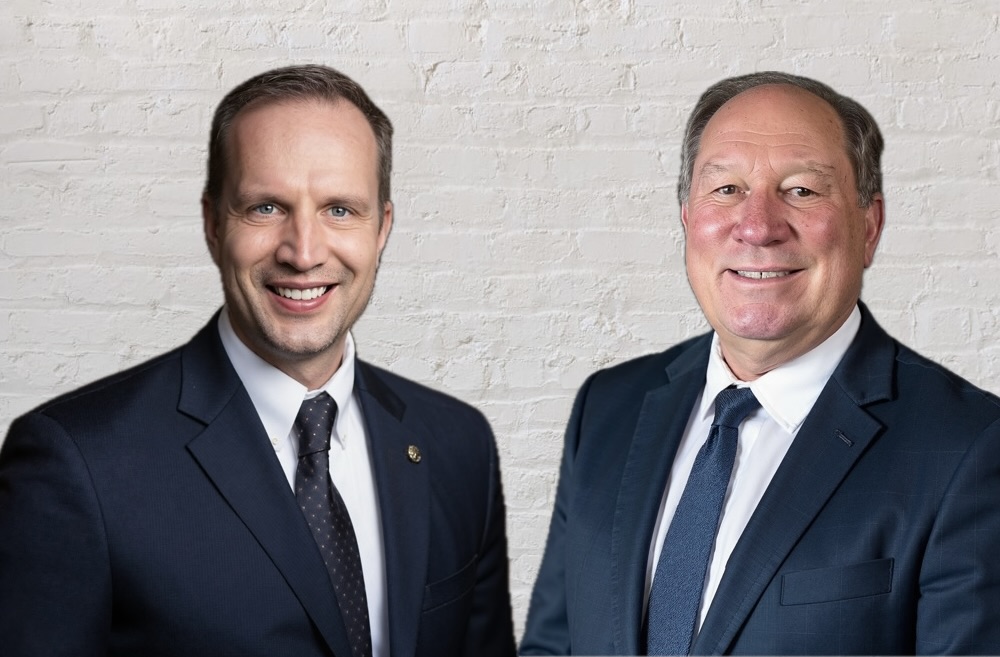
Meet John and Jeff
John Anderson flew Army helicopters and spent 25 years as a commercial airline pilot. Jeff Frankenfield served in the Air Force and holds a degree in finance.
Both are veterans, and both are committed to helping everyday Americans build retirement income they can understand. We explain everything in plain language, with no pressure.
Free Florida Retirement Income Guide
A plain-English guide to Social Security timing, protecting retirement income from market drops and closing income gaps, for St. Petersburg area retirees. Sent to your email.
Start Building Your St. Petersburg Retirement Income Plan
Safe Harbor Retirement offers a free Retirement Paycheck Review by phone or video. We'll walk through:
- Your retirement savings
- Social Security
- Pensions
- 401(k)s and IRAs
- Investments
- Expected expenses
- Market risk
- Income gaps
- Annuity options, when appropriate
- Your retirement income goals
No pressure and no obligation. You'll leave with a clearer picture of where you stand.
Learn more about retirement planning throughout Florida, how annuities work, our Lifetime Income Estimator and the Retirement Roadmap blog. Nearby: Clearwater, Tampa.
Frequently Asked Questions About Retirement Planning in St. Petersburg
How does a spouse's Social Security work after a death?
In general, the surviving spouse keeps the larger of the two benefits. A review can show how different claiming ages change that.
Should the higher earner delay Social Security?
Sometimes. Delaying can raise the benefit a survivor receives, but it depends on health, other income and needs.
What is a joint-life pension option?
It pays a smaller amount while both are alive, so a surviving spouse continues to receive income. The right choice depends on your situation.
How much money do I need to retire in St. Petersburg?
It depends on your spending, Social Security, pensions, debt, insurance and healthcare costs. A review estimates the monthly income your savings must support.
Does Florida tax Social Security?
No. Florida has no state income tax, so it does not tax Social Security benefits. Federal tax may still apply depending on your income.
What should I do with my 401(k) when I retire?
You may leave it in the plan, roll it to an IRA, take distributions or use part for income. The right choice depends on your situation.
What happens to my retirement if the market crashes?
A large decline early in retirement can hurt more if you are also withdrawing money. Separating money by purpose can help address that risk.
Can I protect some of my savings from market losses?
Certain fixed and fixed indexed annuities protect contract value from direct market losses, subject to the contract's terms. They also have limits and surrender charges.
Do I have to come to an office?
No. The Retirement Paycheck Review is by phone or video.

Insurance and annuity guarantees are backed by the financial strength and claims-paying ability of the issuing insurance company. Fixed indexed annuities are insurance products and do not directly participate in the stock market. Annuities may include surrender charges, withdrawal limitations and other contract provisions. Insurance products and availability may vary by state. This material is intended for general informational purposes and should not be considered individualized investment, tax or legal advice. Consult appropriate professionals regarding your individual circumstances. Examples are hypothetical and for illustration only.
Get the Free Florida Retirement Income Guide
Enter your details and we'll email it to you. No obligation.